Gray, milky oil on the dipstick is one of the few symptoms on an excavator that should stop work the same day. It means coolant is entering the lubrication circuit, and unlike a hydraulic leak, this one contaminates the one fluid that keeps the crankshaft alive. Engines driven far with coolant-laden oil score bearings and seize quickly, and the repair bill grows every hour the machine keeps working. This guide from Guangzhou Shenyue Machinery Technology Co., Ltd. lists the real leak paths on a Kobelco, gives a diagnosis order that finds the culprit without stripping everything at once, and shows which parts usually end up being ordered.
Where the coolant gets in
Coolant and oil meet in only a few places. Above the oil: the cylinder head gasket fails between a coolant passage and a return path, letting coolant drain into the sump after shutdown. Around the cylinders: a cracked liner lets coolant pressurize into the crankcase while the engine runs. In the oil circuit: the oil cooler leaks internally, exchanging coolant into oil under pressure every time both are flowing. At the cooler connections: a cracked oil cooler housing or a failed seal at the filter housing lets the two fluids mix externally first and internally later. Our guide to the freeze plugs and coolant loss covers the rust-driven side of the same story, and the cooling system walkthrough maps where the cooler sits in the circuit.
The diagnosis order that avoids waste
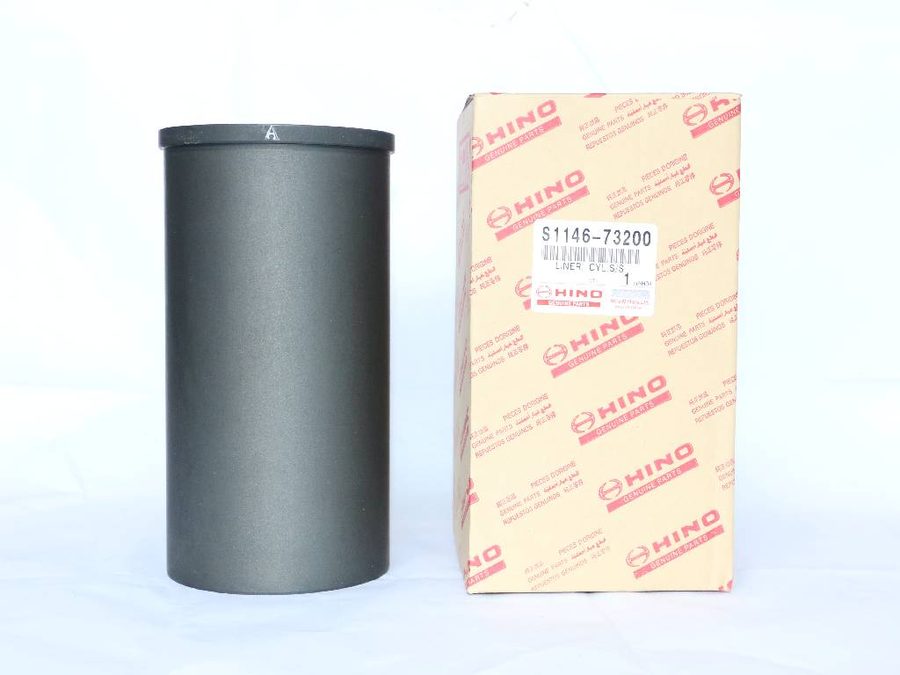
Start with the cheapest checks. Confirm the coolant level actually drops and the oil actually rises — log both for a day of running, because guessing from memory wastes a teardown. Next, pressurize the cooling system cold and watch for coolant moving into the sump; a steady rise with the engine off points at the head gasket or a liner crack. Then run an oil analysis: our programme guide to used oil sampling explains how a sodium and potassium spike confirms coolant while wear-metal levels say how long it has been happening. Only then open the engine: drop the oil pan, inspect the liner bores and pressurize each cylinder. On the J05/J08 family our records quote the cylinder liner under VHS114673210 (type 8-B), and head gaskets under references such as VH11115E0090/VH111152870A — the parts book for the serial stays the final authority on both.
Two symptoms that travel with the leak
Watch for the companions that narrow the search before any pressure test. A cooling system that pushes coolant into the overflow bottle overnight, with no external drip anywhere, is a classic internal-entry signature: pressure held in the jacket escapes into the crankcase instead of the atmosphere. A rough idle right after a cold start that smooths out as the engine warms can point at a liner letting coolant into a single cylinder. And exhaust steam that reappears shortly after warm-up, on a machine with no visible white smoke at speed, is worth logging alongside the dipstick check. None of these proves the leak alone, but each one trims the list of suspects before the first bolt comes off.
| Finding | Points to | Parts usually ordered |
|---|---|---|
| Coolant rises with engine off, under pressure | Head gasket or liner crack | Head gasket set, liner(s) |
| Mix only while both circuits are hot and flowing | Oil cooler internal leak | Oil cooler or core |
| Wet outside the cooler housing | Cooler housing or seal | Housing seal, O-rings |
| Sodium spike in oil analysis, no external leak | Internal coolant path | Gasket set + suspected assembly |
After the repair
Fixing the leak is half the job; the oil that was in the sump during the mixing event must go, all of it, along with a fresh filter, because coolant-laden oil keeps etching bearing surfaces even after the leak is closed. Plan a short re-check interval: sample the oil again after fifty hours or so and compare wear metals against the pre-repair report. NOK's seal documentation at nok.co.jp/en is a useful background read on why degraded seals fail in exactly these circuits. Guangzhou Shenyue Machinery Technology Co., Ltd. supplies gaskets, liners, cooler cores and the oil-side small parts in one shipment, marks every item genuine, OEM or aftermarket at quotation, and supports the sampling follow-up with parts if the second report still looks wrong.
Frequently Asked Questions
What does milky engine oil mean on a Kobelco excavator?
It means coolant has entered the lubrication circuit — through the head gasket, a cracked liner, or an internal oil cooler leak. The machine should stop work the same day, because coolant-laden oil destroys bearings quickly. Guangzhou Shenyue Machinery Technology Co., Ltd. supplies the gaskets, liners and cooler cores involved.
How do I tell coolant in oil apart from fuel dilution?
Coolant entry shows a falling coolant level and a sodium spike in oil analysis; fuel dilution shows a rising oil level with a diesel smell. Both look milky on the dipstick, but the diagnosis order and the parts involved are completely different.
Which parts usually fix coolant-in-oil problems on the J05/J08 family?
The head gasket set, cylinder liners and the oil cooler cover most cases. Our records quote the J05/J08 cylinder liner under VHS114673210 (type 8-B) and head gaskets under the VH11115E0090 family; the parts book for the serial is the final authority.
Should the oil be changed after fixing the leak?
Yes — all of it, with a fresh filter, even if it was changed recently. Coolant-laden oil keeps attacking bearing surfaces until it is fully drained. A follow-up oil sample after about fifty hours confirms the repair held.