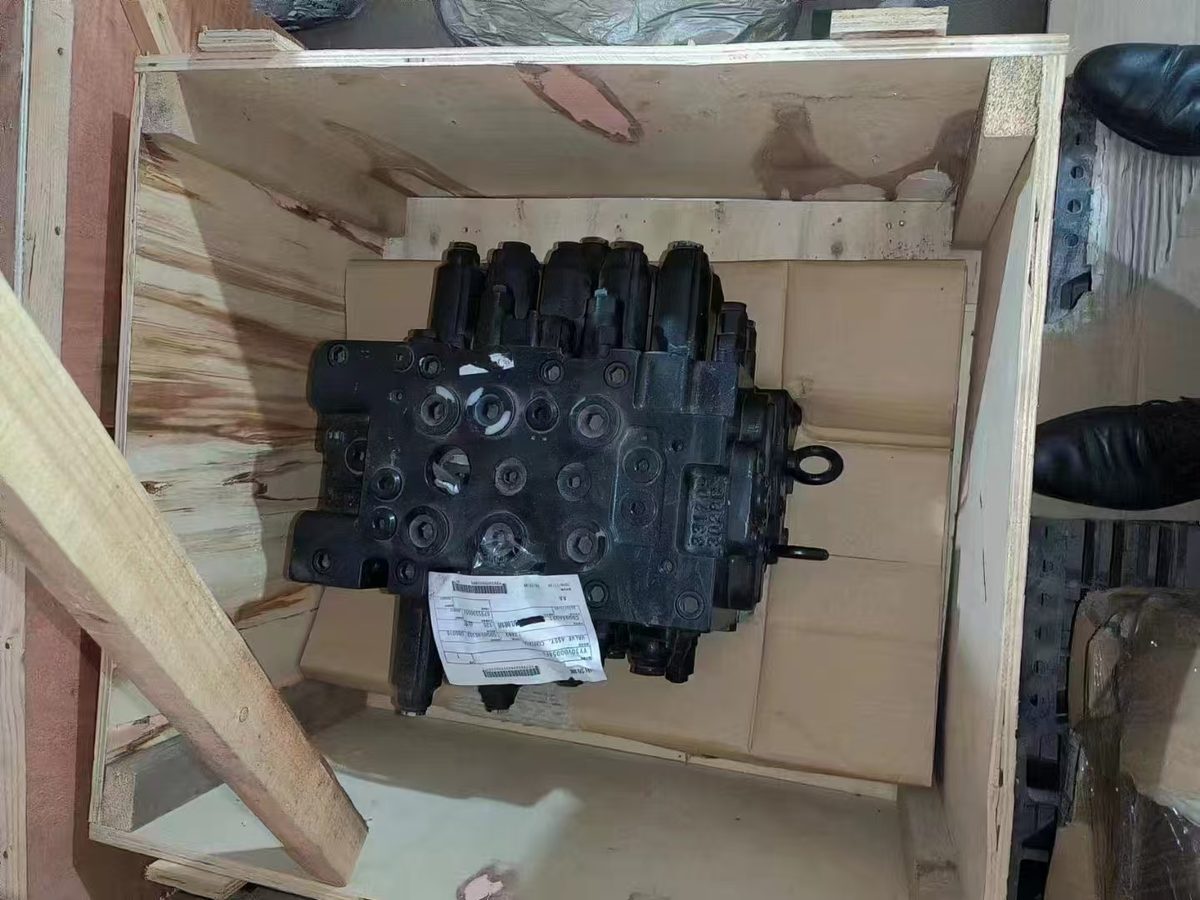
The most misleading hydraulic fault on a Kobelco excavator is one function that slows down while everything else feels normal. The machine digs, swings and tracks like itself, but the boom rises lazily, or the arm curls slowly under load. Because the pump sounds healthy and the other functions are quick, many owners guess at a major pump rebuild — and pay for work the machine does not need. A single slow function almost always means a local fault: the cylinder, the valve section behind it, or the pilot feed to that section. Guangzhou Shenyue Machinery Technology Co., Ltd. supplies the parts for all three, and this guide walks the isolation order that saves money.
Confirm the fault is really single-function
Start with a stopwatch, not a feeling. Cycle the suspect function five times unloaded and five times loaded, and time one or two other functions the same way. Note whether the slowness changes between cold oil and hot oil. If two functions are slow together, the story changes — shared sections or pump-side issues come into play, and you should read our all-functions slow guide instead. Ten minutes of timing here prevents a wasted parts order later.
Check the pilot side first
The pilot circuit feeds the main spool for each function, and a weak pilot signal produces exactly this symptom: the function works, but softly and slowly, because the spool never reaches full stroke. Check pilot pressure at the test port for that function while the joystick is held at full stroke, and compare it with the machine's specified pilot pressure. Our pilot circuit and filter guide covers the filter and joystick pilot valve checks that come before any valve work. A clogged pilot filter can slow one favoured function before the others show it.
Read the pressure at that section
Fit a gauge to the pressure tap for the suspect section and stall the function against a solid load. If the gauge climbs to the relief setting while the function still moves slowly, oil is escaping somewhere inside — the pump can build pressure, but the flow is bypassing. If the gauge never reaches relief, the problem is upstream: spool stroke, pilot feed or supply. This single reading is what separates a parts order from a wild guess, and our test port guide shows where to tap in safely.
Separate cylinder bypass from valve leakage
If pressure reaches relief but speed is poor, the bypass is inside the cylinder or the valve section. The classic cylinder test is to stall the function and watch for rod creep, then repeat with the cylinder at the opposite end of stroke — a piston seal that leaks shows creep proportional to load. Cylinder-side symptoms and seal inspection are covered in our cylinder and rod diagnosis guide. If the cylinder proves tight, the valve section itself — spool bore wear or a stuck-pressure relief cartridge — is the remaining suspect, and section-level parts such as relief elements, for example the V9510318049-T family recorded in our books, are quoted against the machine.
When the pump is still the suspect
If the slow function shares its supply with another, or if two functions weaken together, the pump and its regulator return to the list. The K3V and K5V pump families fitted across the SK range, with Kawasaki heritage documented at khi.co.jp, are covered in depth in our pump and regulator articles. Buying the pump last, after the local checks above, is the discipline that keeps repair budgets honest.
The buying side of a correct diagnosis
Once the isolation points at a cylinder seal kit, a relief cartridge or a valve section part, quote by machine serial rather than by model name. Guangzhou Shenyue Machinery Technology Co., Ltd. keeps more than 3,000 part types on the shelf and over 100,000 part numbers available to order, and every line is graded genuine, OEM or aftermarket. For fleets that mix brands, the same diagnostic logic is explained for other makes by our colleagues at corbayparts.com — the hydraulics obey the same physics, but the part numbers never cross.
Frequently Asked Questions
Why is only one function on my Kobelco slow while the rest are normal?
Because the fault is local to that function: a weak pilot feed to its spool, a valve section fault, or a bypassing cylinder. The pump is usually healthy — time the function, check pilot pressure at that section's port, then stall-test before ordering parts.
How do I tell a bypassing cylinder from a leaking valve section?
Stall the function against a solid load: if pressure reaches the relief setting while movement is still slow, oil is bypassing internally. Watch for rod creep at both ends of stroke — creep that follows the load points to the cylinder piston seals.
Which parts fix a slow single function most often?
In the field, pilot filters, pilot valves, cylinder seal kits and section relief cartridges lead the list. Guangzhou Shenyue Machinery Technology Co., Ltd. records section relief families such as V9510318049-T and quotes each part graded genuine, OEM or aftermarket.
Can a clogged pilot filter slow just one function?
Yes. Each function's spool depends on pilot pressure, and a restriction can show first on the function with the longest lines or highest demand. Guangzhou Shenyue Machinery Technology Co., Ltd. recommends checking the pilot filter before any valve or cylinder is opened.