Most wrong-part arguments start the same way: the buyer quotes eleven characters and the seller ships a twelfth. Kobelco numbers carry a trailing block — F1, P1, P1C, J1B, CN, a dash T — and that block is part of the identity, not a housekeeping code. Guangzhou Shenyue Machinery Technology Co., Ltd. sees this weekly, so this guide covers the suffix only; the leading letters are explained in our prefix guide, and the two should be read together.
What the last block does
A Kobelco number is built in blocks: an alphanumeric prefix that points to a system or a supplier series, a numeric core, and a suffix that marks how this particular record differs from its neighbours. In our index the suffix behaves in three ways. It can mark a revision, where the later number replaces the earlier one and fits the same hole. It can mark a source, where the same function is supplied from a different plant or supplier and both records stay live. Or it can mark a kit or assembly configuration, where the contents change and the number must not be swapped.
Three kinds of suffix change, three different risks
The reason this matters is that only one of the three is safe to ignore. A revision is normally a supersession: order the new number, fit it, move on. A source difference is usually safe in service but not always safe in paperwork — some warranty and customs records expect the exact string. A kit or configuration change is the dangerous one, because the number looks almost identical and the part does not fit.
| Number we record | What it is | What the suffix tells us |
|---|---|---|
| YN11P01118P1 / YN11P01118P1C | Turbocharger assembly | Two live records for one function; confirm by engine plate |
| VH241003251 / VH241003251C | Turbocharger assembly | Same family, different record; do not mix invoices |
| 24100N7035F3J1B / 24100N7035F3CN | SK330-8 track roller | Two source suffixes, same function |
| YN21P01068R100J1N / J1L | Fuel filter, water separation | Supplier suffix; both are stocked variants |
| V9510318049-T | Main relief valve | Dash suffix; quote it in full |
The track roller case is the clearest example
On the SK330-8 we record the track roller under 24100N7035F3J1B and again under 24100N7035F3CN. Same roller, same position on the machine, two suffixes that follow the supply route rather than the design. A buyer who "cleans up" the number by deleting the last three characters creates an order that cannot be matched to either record. The same pattern appears on the fuel filter group YN21P01068R100J1N and J1L: both are real, both are stocked, and the difference sits in the supply chain, not in the filtration.
Where the suffix is not cosmetic
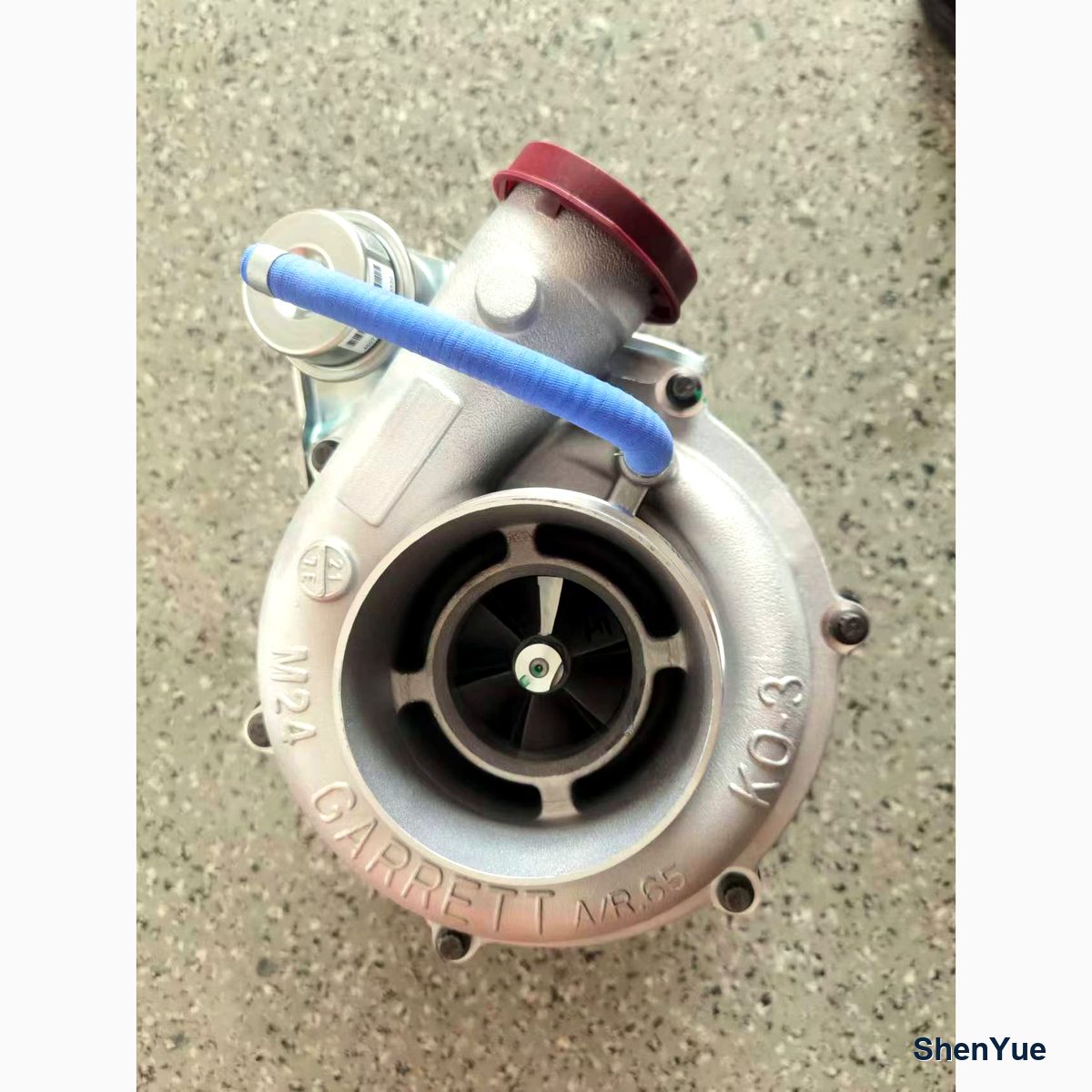
The turbocharger pair is the case to treat with care. YN11P01118P1 and YN11P01118P1C both appear as turbocharger assemblies in our records, and VH241003251 sits beside VH241003251C in the same way. These are not interchangeable by default: the suffix may reflect a different wastegate setting, a different housing machining or a different supplier build, and the engine plate decides which one the machine was built with. The same caution applies to engine assemblies, where a trailing C on a middle-engine record can separate two build configurations that look identical on a pallet.
How to quote it: copy the number from the plate, the parts book or the old part — including every character after the last digit — and photograph the old part beside a ruler. Guangzhou Shenyue Machinery Technology Co., Ltd. matches the full string, then checks the serial; if the suffix has been superseded, we say so in writing before invoicing.
Rules that prevent the argument
Never trim a suffix to make a number "look right". Never assume that a higher suffix is newer, because in a source change it is simply different. Never accept "it is the same, only the last letters differ" without a written supersession from the supplier. And when a machine arrives with no paperwork, use the part number search with photographs of the casting marks rather than guessing from a similar machine. Our measurement-based identification guide covers the no-number case in detail. The full shelf is listed in the catalogue, and Guangzhou Shenyue Machinery Technology Co., Ltd. will read a plate photograph against the index before quoting. Kobelco publishes its own machine documentation at kobelco.co.jp, which is the reference we use when a suffix sits between two published variants.
Frequently Asked Questions
What does the C at the end of a Kobelco part number mean?
It marks a separate record from the same family, usually a different source or build configuration. It is not safe to assume that YN11P01118P1C replaces YN11P01118P1 without written confirmation. Guangzhou Shenyue Machinery Technology Co., Ltd. checks the engine plate before shipping either number.
Are 24100N7035F3J1B and 24100N7035F3CN the same track roller?
Yes for the SK330-8. Both suffixes are recorded against the same roller function and both are stocked variants. The suffix follows the supply route, so deleting it from an order makes the line unmatchable.
Is a higher suffix always the newer revision?
No. A suffix can mark a revision, a supply source or a kit configuration, and only the first behaves like a supersession. Order the string that matches your plate unless the supplier confirms in writing that the number has been replaced.
Can I order by the number on the old part only?
Usually, provided you quote it in full. If the old part is unmarked or the label is gone, send photographs and measurements instead of a guessed number, and Guangzhou Shenyue Machinery Technology Co., Ltd. will identify it against the machine serial.